Tổng Hợp Lý Thuyết Câu Tường Thuật Và Bài Tập Thực Hành
Trong tiếng Anh, câu tường thuật rất nhiều người bị nhầm lẫn và làm sai. Hãy cùng Aptis Easy tìm hiểu và luyện tập qua câu tường thuật có đáp án để nắm vững kiến thức.

Aptis Easy

Tổng Hợp Lý Thuyết Câu Tường Thuật Và Bài Tập Thực Hành
Trong tiếng Anh, câu tường thuật rất nhiều người bị nhầm lẫn và làm sai. Hãy cùng Aptis Easy tìm hiểu và luyện tập qua câu tường thuật có đáp án để nắm vững kiến thức.
Aptis Easy
Hiểu và vận dụng được câu tường thuật hãy cùng Aptis Easy tìm hiểu bài học và luyện tập thông qua bài tập câu tường thuật là cần thiết.
 Định nghĩa câu tường thuật
Câu tường thuật dùng để thuật lại lời nói của người nào đó một cách gián tiếp, không dùng dấu ngoặc. Đổi từ câu trực tiếp sang câu tường thuật, ta thay đổi đại từ, thì của động từ, adv chỉ thời gian và nơi chốn sao cho phù hợp với ngữ cảnh.
Câu tường thuật có các dạng nào?
Câu tường thuật dạng hỏi
Câu tường thuật có hai loại Yes/No và Wh-
Câu hỏi Yes/No: Dùng if hoặc whether để thuật lại câu hỏi dạng này.
Ví dụ:
-
Câu trực tiếp: “Did you finish your homework?” she asked.
-
Câu tường thuật: She asked if/whether I had finished my homework.
Câu hỏi Wh-: Dùng từ để hỏi (what, where, why, how,...) để thuật lại câu hỏi.
Ví dụ:
-
Câu trực tiếp: “How do you make this cake?” she asked.
-
Câu tường thuật: She asked how I made that cake.
Câu tường thuật dạng kể
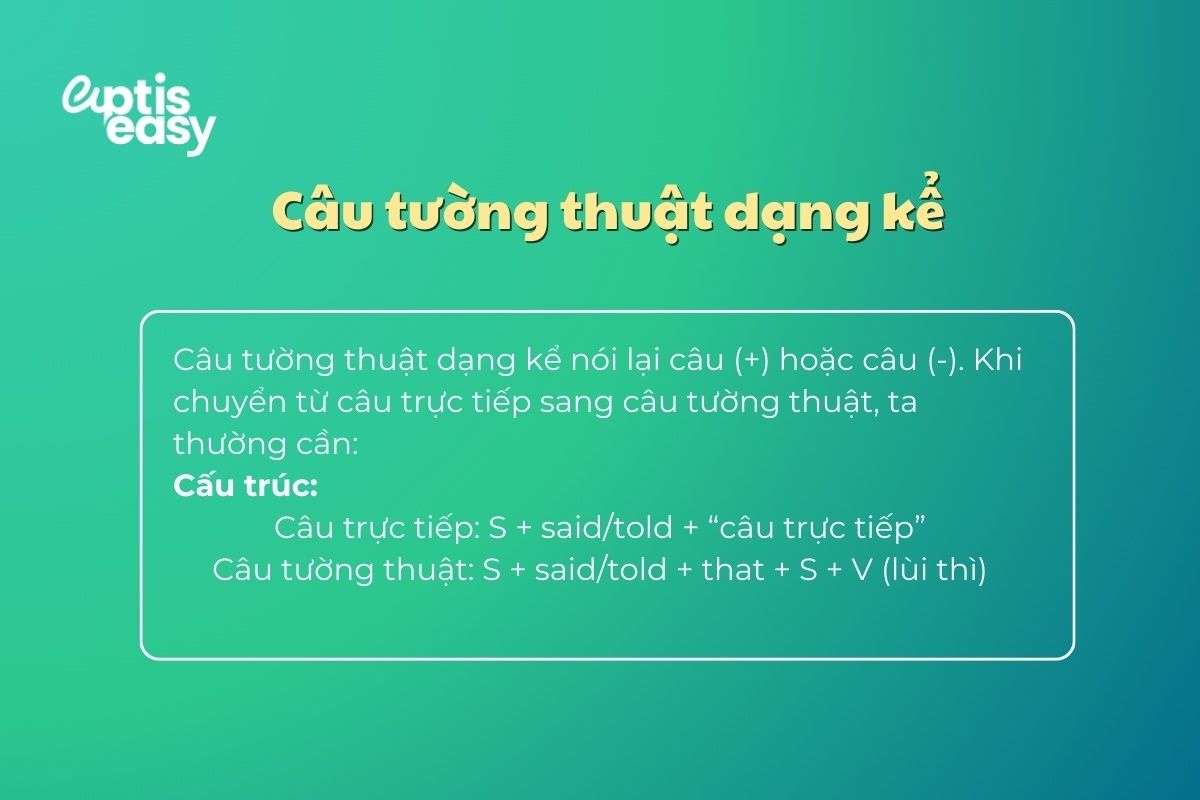
Câu tường thuật dạng kể
Ví dụ:
-
Trực tiếp: "I am happy," she said.
Tường thuật: She said that she was happy.
Câu tường thuật dạng mệnh lệnh
Dùng để nói lại yêu cầu hoặc mệnh lệnh của người nào ai đó.
Ví dụ dạng khẳng định:
-
Câu trực tiếp: "Write your name on the paper," she said.
→ Câu tường thuật: She told me to write my name on the paper.
Ví dụ dạng phủ định:
-
Câu trực tiếp: "Don't play with fire," my mom warned me.
→ Câu tường thuật: My mom warned me not to play with fire.
Một số động từ hay dùng
-
Ordered (ra lệnh)
-
Advised (khuyên)
-
Asked (yêu cầu)
-
Told (bảo)
Các câu tường thuật đặc biệt
 Câu tường thuật có các dạng nào
Câu tường thuật câu hỏi
Được “if” hoặc “whether” cho dạng câu hỏi Yes/No và dạng câu hỏi Wh- như: what, when, who, where, why, how
Ví dụ:
-
Câu trực tiếp: "How did you fix the computer?" he asked.
Câu tường thuật: He asked how I had fixed the computer. -
Câu trực tiếp: "Did you enjoy the party?" he asked.
-
Câu tường thuật: He asked if I had enjoyed the party.
Câu tường thuật cảm thán
Câu tường thuật dạng cảm thán dùng để bày tỏ cảm xúc. Khi chuyển sang câu tường thuật, ta thường dùng các động từ như exclaimed, cried out, remarked with enthusiasm, expressed surprise…
Ví dụ:
-
Câu trực tiếp: "What a beautiful painting!" she exclaimed.
Câu tường thuật: She exclaimed that the painting was beautiful. -
Câu trực tiếp: "This is the best day of my life!" he said happily.
Câu tường thuật: He said happily that it was the best day of his life.
Ví dụ:
-
Câu trực tiếp: "Amazing!" she exclaimed as she opened the gift.
Câu tường thuật: With an exclamation of delight, she exclaimed as she opened the gift.
Câu tường thuật dạng to V đặc biệt
Câu tường thuật lời khuyên
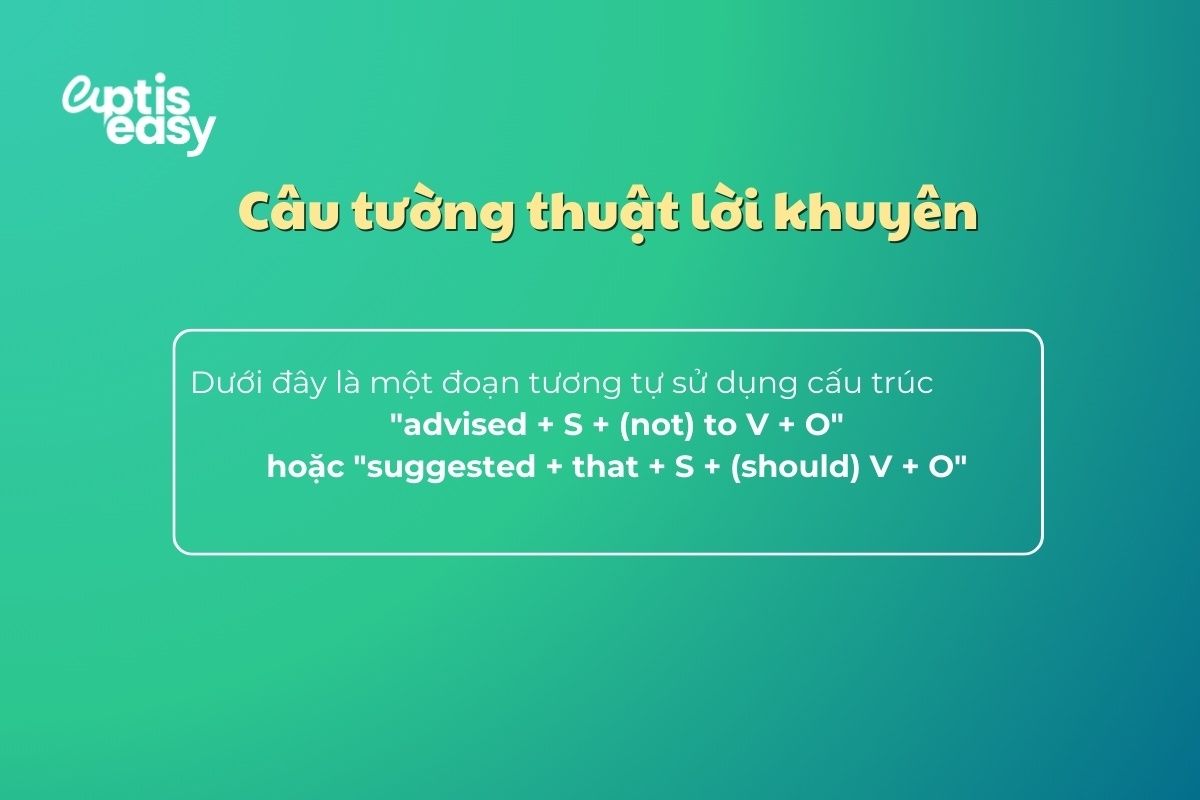 Câu tường thuật lời khuyên
Ví dụ:
-
Câu trực tiếp: "You should exercise regularly to stay fit," the trainer advised.
Câu tường thuật: The trainer advised me to exercise regularly to stay fit.
Câu tường thuật cho phép
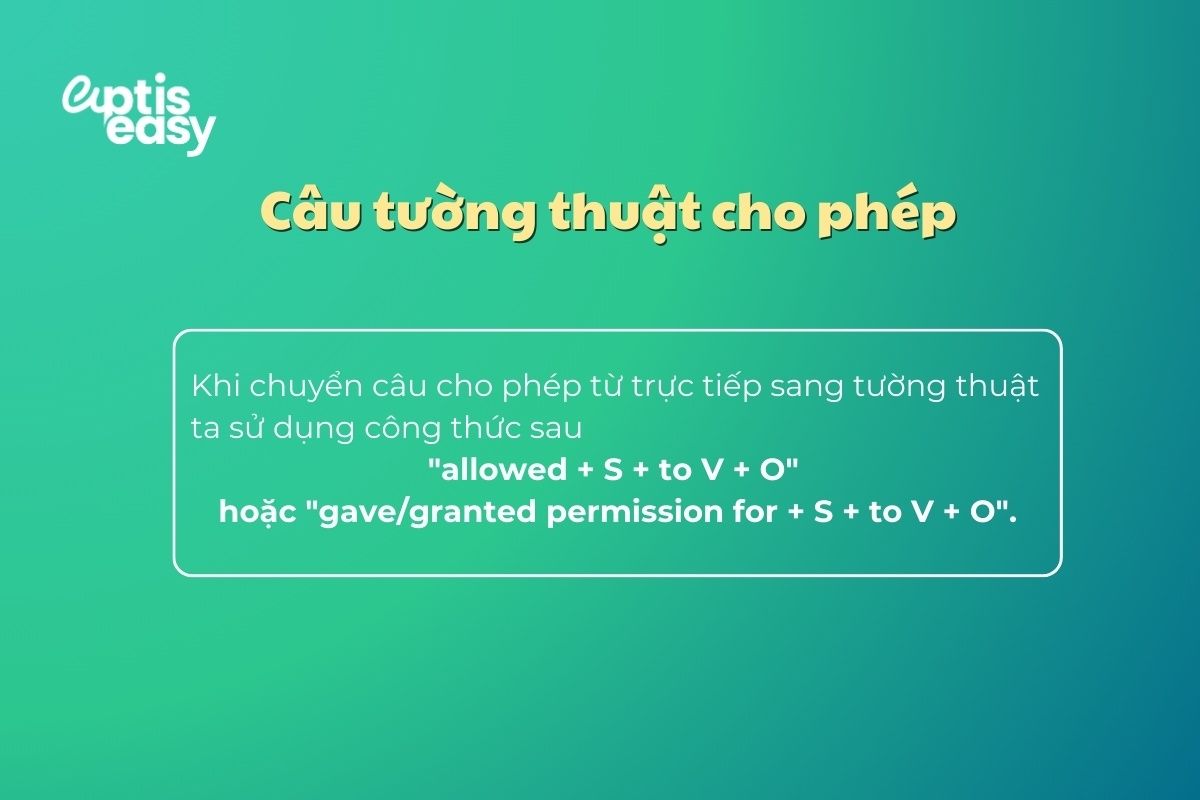 Câu tường thuật cho phép
Ví dụ:
-
Câu trực tiếp: "You may use my phone to make a call," he said.
Câu tường thuật: He allowed me to use his phone to make a call. -
Câu trực tiếp: "I give you permission to enter the office after hours," the manager said.
Câu tường thuật: The manager gave permission for me to enter the office after hours.
Xem thêm:
Câu tường thuật cảnh báo
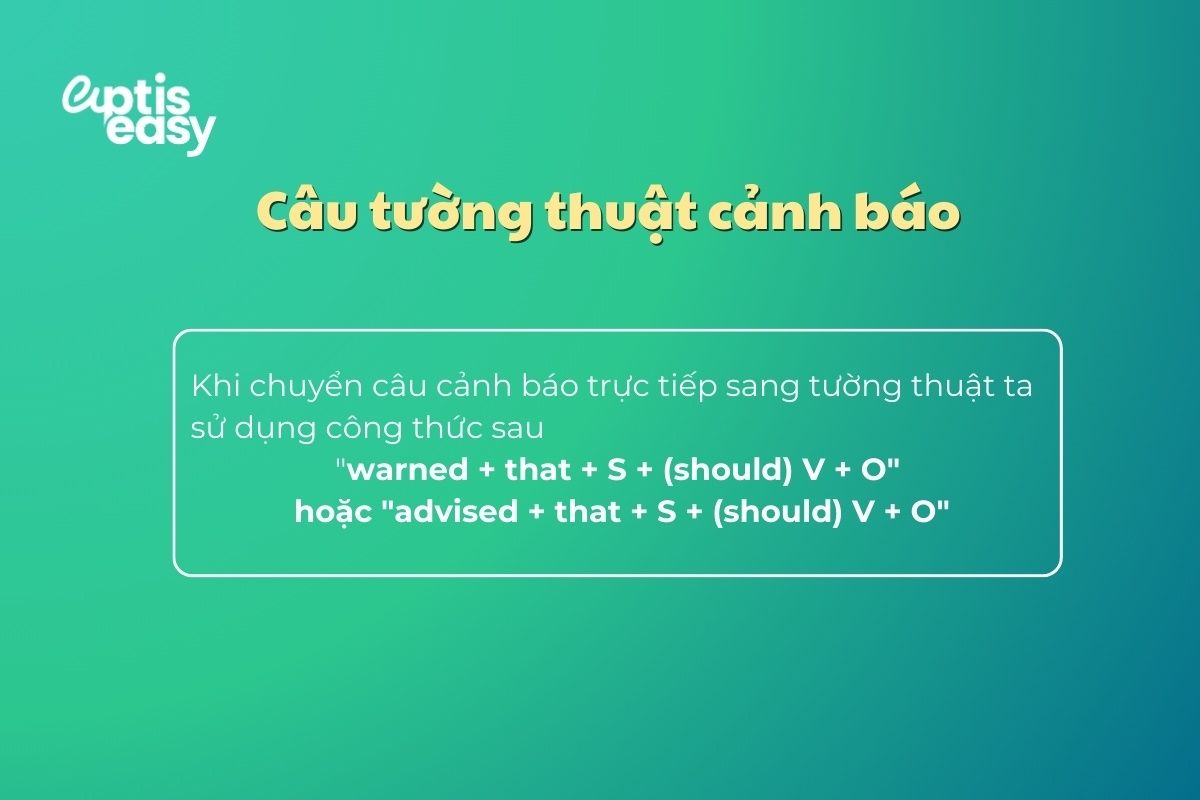 Câu tường thuật cảnh báo
Ví dụ:
-
Câu trực tiếp: "Don't touch that wire! It's live," he warned.
Câu tường thuật: He warned that the wire was live and should not be touched. -
Câu trực tiếp: "Be cautious when walking alone at night," she advised.
Câu tường thuật: She advised that I should be cautious when walking alone at night.
Câu tường thuật lời mời
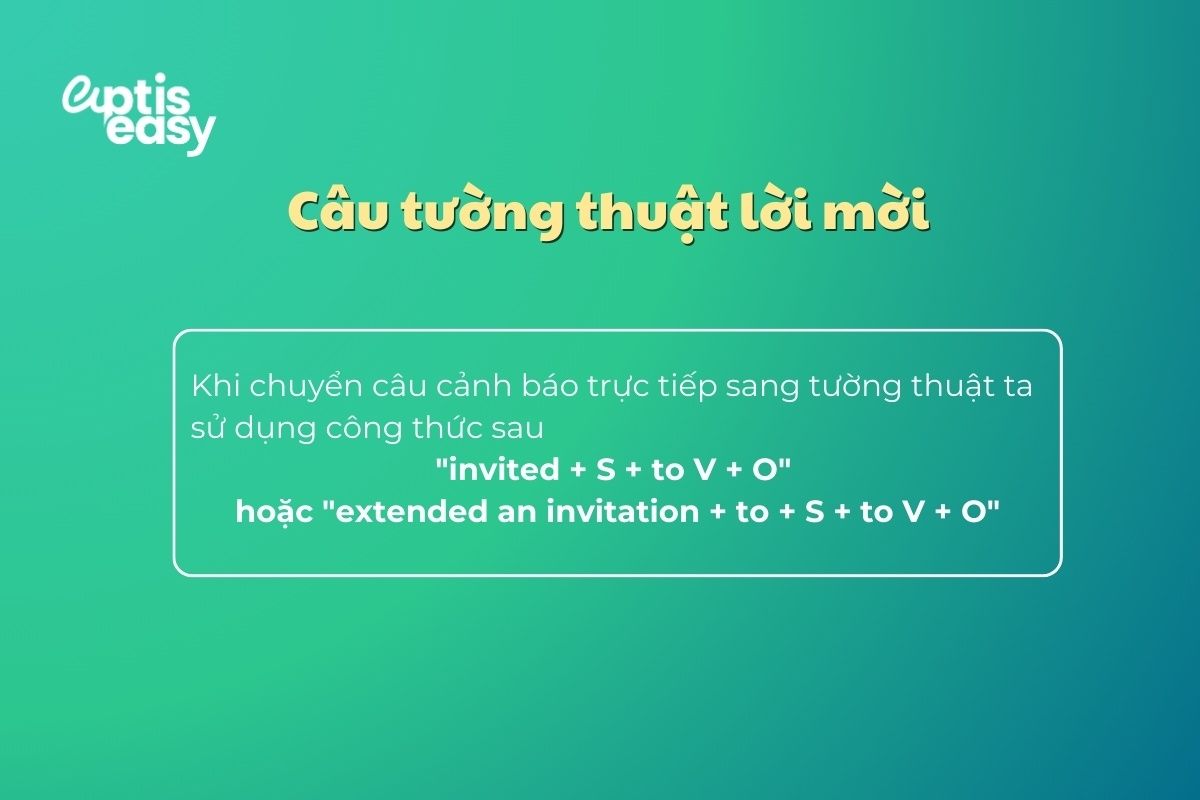 Câu tường thuật lời mời
Ví dụ:
-
Câu trực tiếp: "Would you like to go on a trip with us?" she asked.
Câu tường thuật: She invited me to go on a trip with them. -
Câu trực tiếp: "Please come to our charity event next week," the organizer said.
Câu tường thuật: The organizer extended an invitation to me to attend their charity event next week.
Câu tường thuật lời hứa
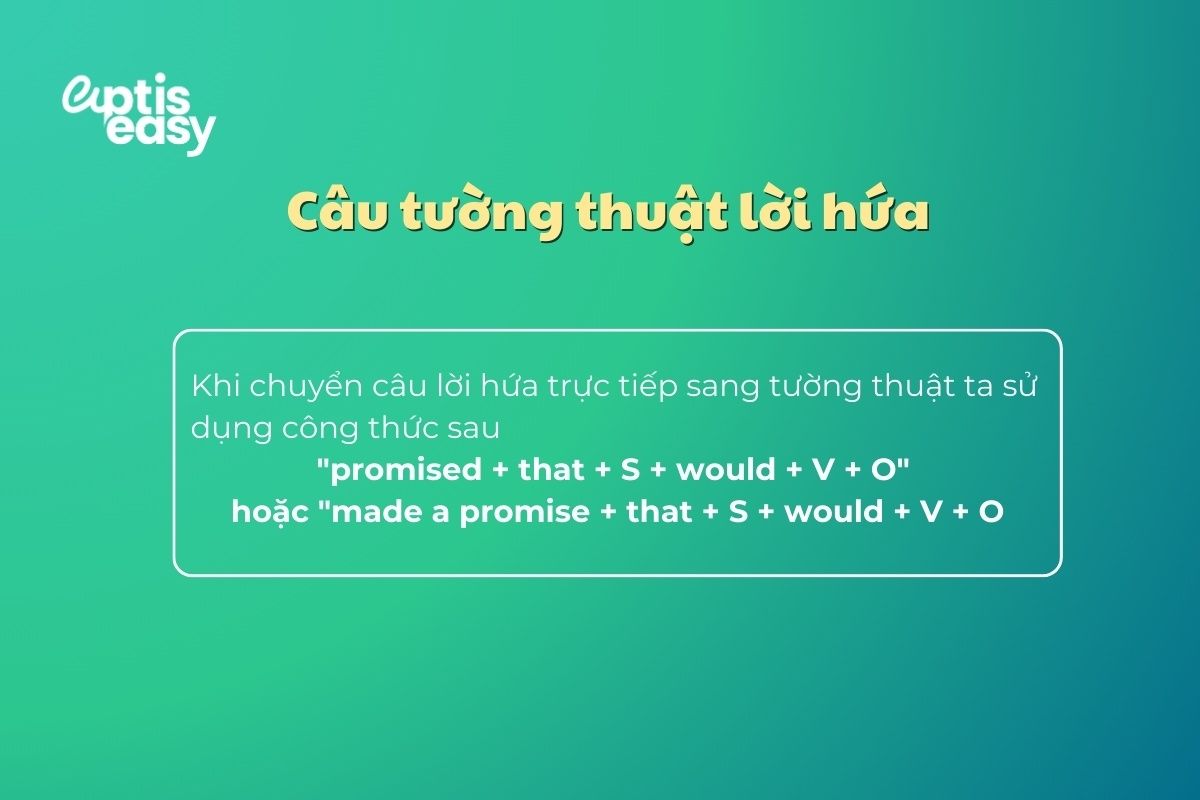 Câu tường thuật lời hứa
Ví dụ:
-
Câu trực tiếp: "We assure you that we will complete the project on time," they said.
Câu tường thuật: They promised that they would complete the project on time.
Câu tường thuật lời đe dọa
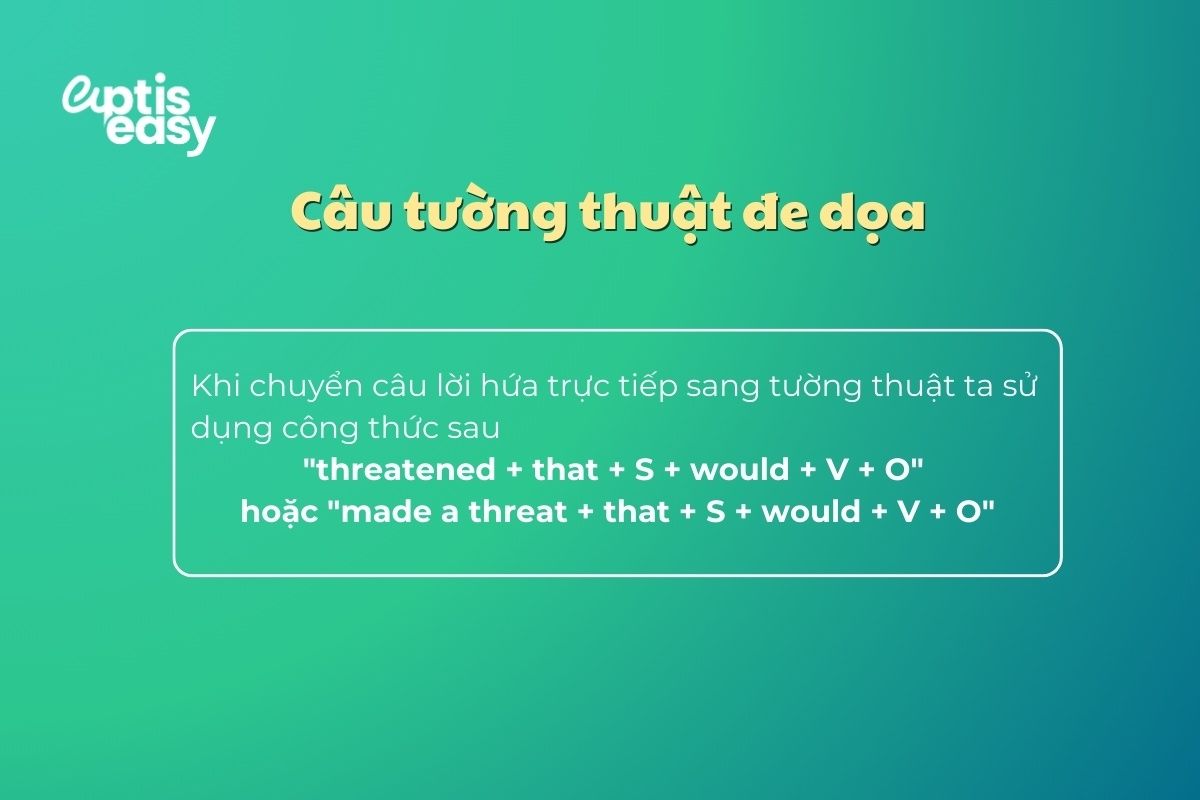 Câu tường thuật đe doa
Ví dụ:
-
Câu trực tiếp: "If you touch my things again, I will tell mom!" she threatened.
Câu tường thuật: She threatened that she would tell mom if I touched her things again. -
Câu trực tiếp: "You will be in big trouble if you break the rules," the teacher warned.
Câu tường thuật: The teacher made a threat that I would be in big trouble if I broke the rules.
Câu tường thuật nhắc nhở
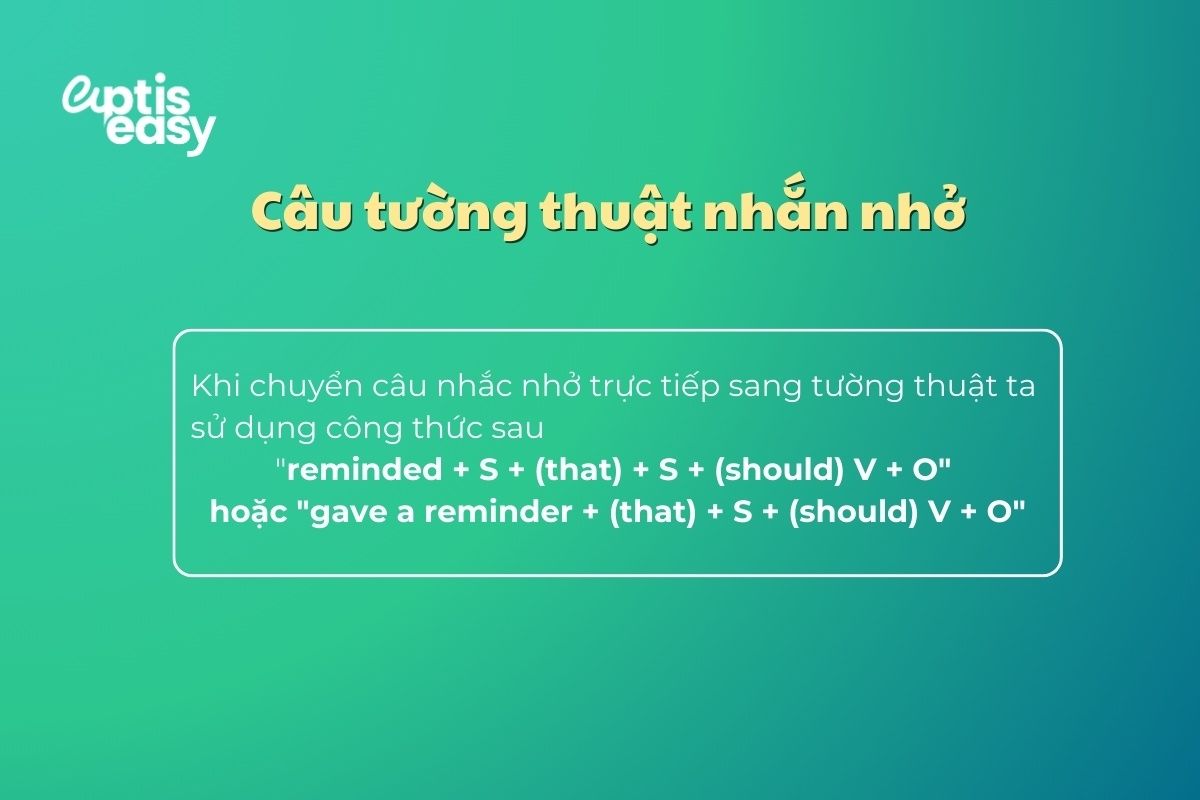 Câu tường thuật nhắc nhở
Ví dụ:
-
Câu trực tiếp: "Remember to take your umbrella. It might rain," he advised.
Câu tường thuật: He gave a reminder that I should take my umbrella as it might rain.
Câu trả lời Yes/No trong câu tường thuật
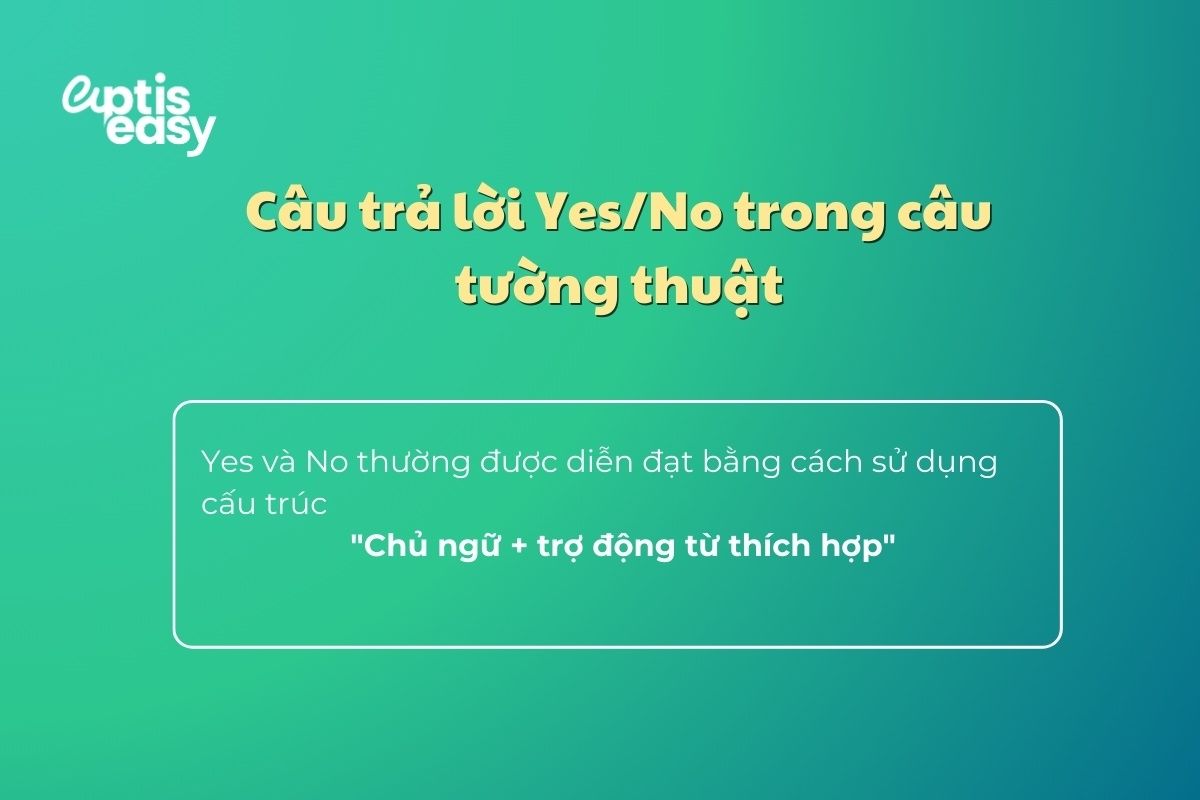 Câu trả lời Yes/No trong câu tường thuật
Ví dụ:
-
Câu trực tiếp: "Did John call you yesterday?" he asked.
Câu tường thuật: He asked if John had called me the day before.
=> "No" sẽ thành: I said he hadn’t. -
Câu trực tiếp: "Have they finished their project?" she asked.
Câu tường thuật: She asked if they had finished their project.
=> "Yes" sẽ thành: They said they had.
Câu tường thuật tình huống khác
Diễn đạt một lý do
-
Câu trực tiếp: "I can't go out because it's raining," he said.
Câu tường thuật: He said that he couldn't go out because it was raining.
-
Câu trực tiếp: "I didn't finish my homework because I was sick," Tom said.
Câu tường thuật: Tom said that he hadn't finished his homework because he had been sick.
Diễn đạt sự nghi ngờ
-
Câu trực tiếp: "I don’t think this plan will work," he said.
-
Câu tường thuật: He doubted that the plan would work.
Diễn đạt sự đồng ý/không đồng ý
-
Câu trực tiếp: "We totally support your plan," they said.
→ Câu tường thuật: They stated that they totally supported my plan.
Diễn đạt một câu điều kiện
Ví dụ:
-
Câu trực tiếp: "If you eat more vegetables, you will be healthier," my mom said.
Câu tường thuật: My mom said that if I ate more vegetables, I would be healthier.
-
Câu trực tiếp: "If she had woken up earlier, she wouldn’t have been late," they said.
Câu tường thuật: They said that if she had woken up earlier, she wouldn’t have been late.
Diễn đạt một kết luận
-
Câu trực tiếp: "So, we must change our strategy," the manager said.
-
Câu tường thuật: The manager stated that they had to change their strategy.
-
Câu trực tiếp: "In conclusion, this is the best option," she said.
-
Câu tường thuật: She said that in conclusion, that was the best option.
Một số lưu ý khi chuyển sang câu tường thuật
 Một số lưu ý khi chuyển sang câu tường thuật
Động từ tường thuật ở hiện tại
Động từ tường thuật được chia ở hiện tại, ta giữ nguyên thì động từ chính
Động từ tường thuật ở quá khứ
Nếu động từ tường thuật ở quá khứ, ta hãy lùi đi một thì theo quy tắc sau
-
Will/ shall → would/ should
-
Am/ is/ are going to → was/ were going to
-
Must → had to
-
Can → could
-
Hiện tại đơn → quá khứ đơn
-
Hiện tại tiếp diễn → quá khứ tiếp diễn
-
Hiện tại hoàn thành → quá khứ hoàn thành
-
Quá khứ tiếp diễn → quá khứ hoàn thành tiếp diễn
-
Quá khứ đơn → quá khứ hoàn thành
Chuyển đổi adv chỉ thời gian và nơi chốn
-
Today → that day
-
Tonight → that night
-
Tomorrow → the next day/ the following day
-
Yesterday → the day before/ the previous day
-
Ago → before
-
Now → then
-
Next week → the next/ following week
-
Last week → the previous week/the week before
-
Here → there
Ví dụ:
-
Câu trực tiếp: "I didn’t see him two days ago," Anna said.
-
Câu tường thuật: Anna said that she hadn’t seen him two days before.
Bài tập vận dụng câu tường thuật có đáp án chi tiết
Ví dụ 1: Chuyển các câu sau từ câu trực tiếp sang câu tường thuật
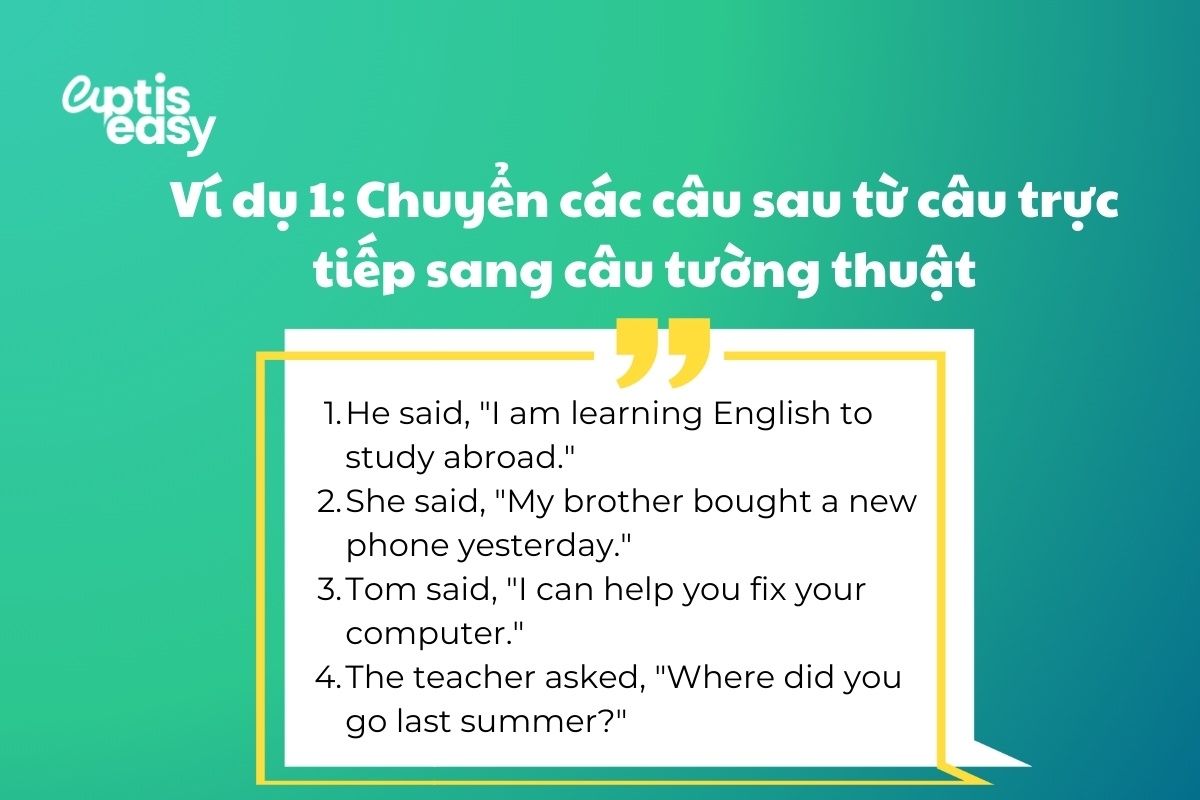 Ví dụ 1
Giải thích:
-
Câu tường thuật: He said that he was learning English to study abroad.
→ (Đổi am learning → was learning do lùi thì từ hiện tại tiếp diễn sang quá khứ tiếp diễn.) -
Câu tường thuật: She said that her brother had bought a new phone the day before.
→ (Đổi bought → had bought do lùi thì từ quá khứ đơn sang quá khứ hoàn thành.)
→ (Đổi yesterday → the day before theo quy tắc đổi trạng từ thời gian.) -
Câu tường thuật: Tom said that he could help me fix my computer.
→ (Đổi can → could do lùi thì từ hiện tại đơn sang quá khứ đơn.)
→ (Đổi you → me, your → my theo ngữ cảnh.) -
Câu tường thuật: The teacher asked where I had gone the previous summer.
→ (Đổi did go → had gone do lùi thì từ quá khứ đơn sang quá khứ hoàn thành.)
→ (Đổi last summer → the previous summer theo quy tắc đổi trạng từ thời gian.)
Ví dụ 2: Chuyển câu trực tiếp sang câu tường thuật
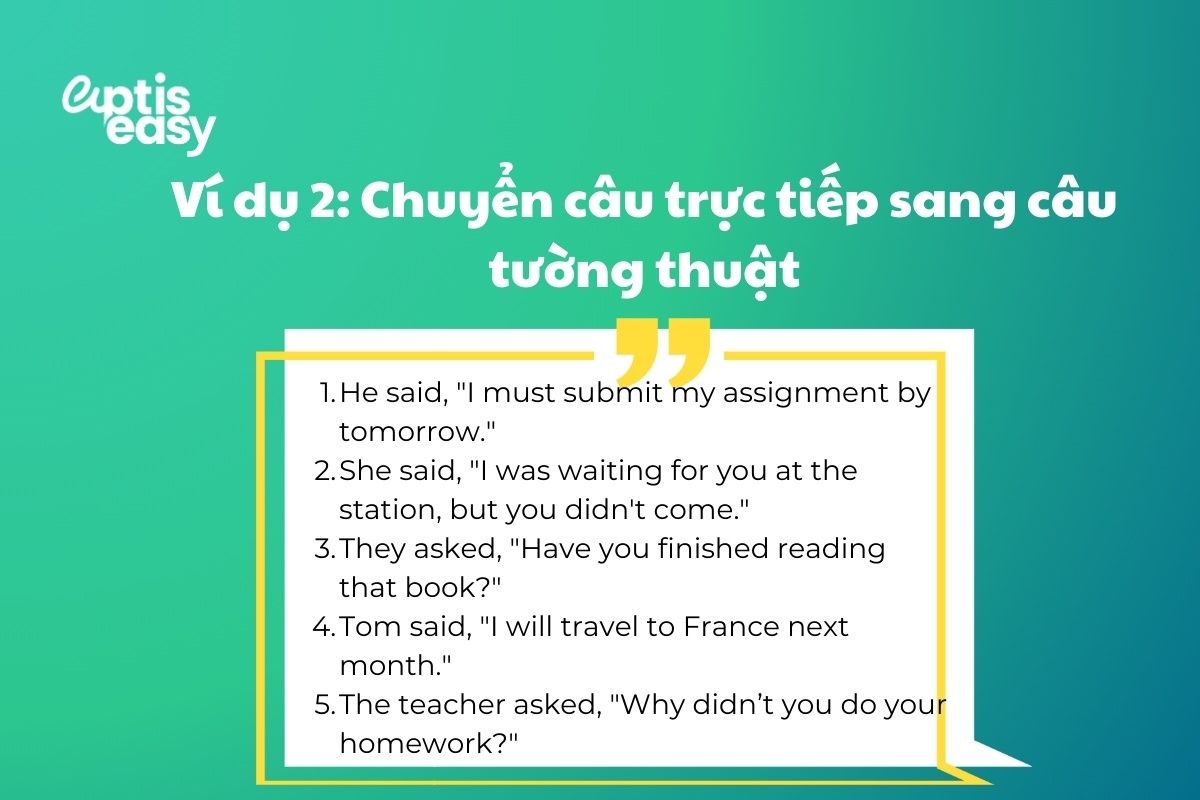 Ví dụ 2
Giải thích:
-
He said that he had to submit his assignment by the next day.
-
She said that she had been waiting for me at the station, but I hadn’t come.
-
They asked if I had finished reading that book.
-
Tom said that he would travel to France the following month.
-
The teacher asked why I hadn’t done my homework.
Câu tường thuật là ngữ pháp quan trọng. Đừng bỏ lỡ khóa học Aptis để nâng cao trình độ tiếng Anh của bạn nhá.
Xóa mất gốc Tiếng Anh cùng khóa học Pre-Aptis tại Aptis Easy nhé!